
Blog
Blog No. 40 – February 21, 2026 – The Life of a young Kamikaze Pilot

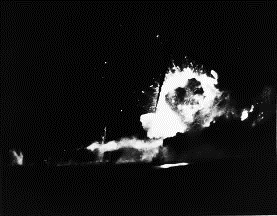
Feb. 21, 1945: USS Bismarck Sea CVE-95 as it was seen burning after being hit by Kamikaze aircraft off Iwo Jima – it was the final massive explosion (Official U.S. Navy photograph now in the collections of the National Archives. Catalog#: 80-G-335103.)
Dear Parents,
In the season of the Lunar New Year, from far away I trust that you are staying in good health. Fortunately I am in robust health and fighting, so please rest assured.
The war situation truly has reached a peak in intensity. Now the time has come for me with resolve to die for the country. Parents, causing you many worries was inexcusable. Finally my ardent desire has been rewarded, and it has come about that I bravely will make a sortie as a shield for the country and Emperor.
Sooner or later in order to achieve a breakthrough in this war, we had to retaliate with death. To the best of my ability, poor though it may be, I am a person who has a renewed spirit.
Parents, now I have tears of gratitude for your very warm kindness. However, now I have received an Imperial command. I am confident that repaying and serving the Emperor through the Special Attack Corps will be my greatest act of filial piety.
Since graduation from flight training, as I served at Matsuyama Base, suddenly on February 11 we received an order to depart for the 1st Air Flotilla. Immediately on February 12, all planes moved to Katori Base in two hours. One unit searched for and attacked the enemy, and it came about that planes of many classmates did not return.
Soon on the 15th and 16th, we had a huge enemy air attack, and the base suffered heavy machine-gun strafing. More than ten aircraft went up in flames, and magnificent aerial battles were displayed in all directions.
At 1 p.m. on the 17th, there was an order from Imperial General Headquarters for the 1st Air Flotilla to form a special attack unit. I will stiffen my determination even more, and I wait for the day when I will close in and attack.
Tomorrow it is planned that we will advance to Iwo Jima and then make an attack.
Please understand when the situation is as described before, I go gladly to fall as a flower in the Emperor’s military force. I pray that you sufficiently watch over yourselves and that you have good health for a very long time.
With dauntless courage, I will plunge into an enemy ship.
With messy writing, I end this final letter as I suppress hot tears.
I pray for everyone’s health.
(Later, the writer of the above letter also wrote his final letter.)
To Parents at time of my farewell,
On the occasion of this unprecedented situation for the Empire, I bear on my shoulders the country’s fate. Today I will rush in to destroy the American fleet as a member of the Mitate Special Attack Unit. I will die for an eternal cause.
I certainly will not forget your kindness for the past 20 years. Please forgive my past lack of filial piety. However, I will do consummate service for the Emperor. Even with my poor ability, I will go and fall splendidly as a young cherry blossom in a way to meet your expectations.
It is extremely regrettable to die at the age of 21 [1] without having completed any great deeds, but since fortunately I have received an Imperial command, I gladly will go smiling to fall as a flower to defend the country. Therefore, you can surely guess my thinking. I earnestly ask that you understand me.
There is not anything in addition to this as a final letter. Please pay sufficient attention to your health, and please raise Kimiko and Chūji to be fine persons.
Carrying a bomb, I now will make an air raid at Iwo Jima and carry out a taiatari (body-crashing) attack against an enemy ship.
I have no regrets. There is only the country.
Having determination like this, I earnestly ask that you please do not grieve in any way even with news of my death in battle. Please be glad with there being nothing that surpasses this as the long-cherished desire of a young man. Please wait for the day when it is announced in the newspapers and on the radio.
Well then, next time I will meet you at Yasukuni Shrine [2] in the springtime when the cherry trees are in full bloom.
Please give my best regards to relatives, acquaintances, friends, and all of the townspeople.
Finally, once again I pray for the family’s health.
Letters translated by Bill Gordon
May and November 2018
The first letter was written on February 17, 1945, at Katori Air Base in Chiba Prefecture, and comes from Orihara (1973, 228-30). The second letter comes from Mainichi Shinbunsha (1968, 83-4). The biographical information in the first paragraph comes from Mainichi Shinbunsha (1968, 83) and Osuo (2005, 227).
Notes
- The traditional Japanese method of counting age, as in much of East Asia, regards a child as age one at birth and adds an additional year on each New Year’s day thereafter. This explains why the letter indicates his age as 21 whereas Mainichi Shinbunsha (1968, 83) indicates that his age was 20 at time of death.
- Yasukuni Shrine in Tōkyō is the place of enshrinement for spirits of Japan’s war dead.
See: Last Letter of Flight Petty Officer 2nd Class Kunio Shimizu to His Parents
After taking part in the destruction of the USS Saratoga, one kamikaze pilot decided he personally needed to add a bigger moment for the Empire, so in the wee hours of the dark night of February 21, 1945, Flight Petty Officer 2nd Class Kunio Shimizu desired to destroy much more for the Japan Empire before he sacrificed his own life. And there in front of him underway was a more important warship—more important than an aircraft carrier — a destroyer. The pilot flew his bomber around the destroyer’s stern and headed straight for the USS Bismarck Sea. He was pleased seeing this important American target below him.
Down he went, and only 25 feet above the water, wearing a determined smile on his face. Knowing he settled his feelings with his parents by writing to them on the 17th of February, just a few days previous, Shimizu flew his plane directly toward the Bismarck Sea. Then, the aft starboard anti-aircraft gun tracers locked onto the approaching suicide and the destroyer ripped fire at him, but Shimizu, while ablaze, kept a steady course through it all. However, now he was way too low for the ship’s gunners and since he was way too close, he crashed “abeam of the after elevator, between the waterline and the flight deck.” Fires were everywhere with inoperable aft water sprinklers, but other sprinklers were still able to control them.
Except for one thing. Even though Shimizu did his major attack as planned, a second kamikaze saw the blaze and crashed his own plane into the bright orange sight below him, and this second bomber set off a large explosion. Yes, the USS Bismarck Sea now “went up with a roar.”
Captain Pratt called to “abandon ship stations.” He was the last man off, but as he was leaving, there was a truly damage-to-your-ears massive explosion as a result of cooking torpedoes, and the ship “rocked tremendously.” Due to immediate underwater damage and starboard listing, twenty to thirty minutes later, the USS Bismarck Sea “rolled over and sank.” He was one of the survivors and before his very eyes, he watched many of his crew drown and he saw many shot in the cold, black, and rough waters.
Of the 943 men aboard the escort carrier, 218 were lost. Of these, Captain Pratt estimated that 125 were killed aboard the Bismarck Sea by the explosions alone.
See: Air Attack of February 21rst, 1945 – TheologyAndHistory.com
A Kamikaze End
At 1400 on February 21, 1945, Flight Petty Officer 2nd Class Kunio Shimizu took off from Hachijōjima Airfield as navigator/bombardier in a Tenzan carrier attack bomber (Allied code name of Jill) carrying an 800-kg bomb. He was a member of the Kamikaze Special Attack Corps 2nd Mitate Squadron. He died in a special (suicide) attack off Iwo Jima (Iōtō) at the age of 20. He was from Nagano Prefecture and was a member of the 12th Kō Class of the Navy’s Yokaren (Preparatory Flight Training Program).
See: Last Letter of Flight Petty Officer 2nd Class Kunio Shimizu to His Parents
Did you know that …
“When Mongol emperor Kublai Khan sent his naval fleets to attack Japan in the 13th century, fierce winds twice repelled the invasions. The Japanese considered these storms direct gifts from the gods and called them “kamikaze.” The most common translation of the word is “divine wind.”
See: John Donovan “Japanese Kamikazes: Heroic or Horrifying?” 10 April 2020.
HowStuffWorks.com. <https://history.howstuffworks.com/world-war-ii/japanese-kamikazes.htm> 21 February 2026A Kamikaze Plan
During 1942 to 1945, there were many letters and quite a few diary entries plus a number of poems written by young Japanese men who were kamikazes. In another blog I will discuss one of the themes of some of the poems. Here and now, though, let’s talk about how these young men became suicide bombers.
Even before entering their first day of school, these young boys were taught that their emperor wasn’t just their nation’s ruler, they learned from the start, probably from all the images around their home and in their village, that the emperor they needed to worship was a divine being. Was it the first page of their first textbook that demanded, not encouraged, that loyalty was a necessity? Teachers pointed that out to them, and it was followed up in family, neighborhood, and local governing ceremonies.
In the 1930s-1940, Hitler noticed the Japanese aggressive militarism and its similar anticommunist ideology, aligning them with Nazism and Fascism. He jumped at this opportunity to collaborate with them as a power with whom he could work, especially against the Soviet Union and America. Japan offered a strong military alliance to challenge Western power. Strategically, for Hitler, it was the way to go.
Meanwhile, on the Japanese homefront, the boys growing up were confronted with schools of state-sponsored nationalism (fanatic patriotism, military drills, duty to volunteer into the service to protect Japan), schools who indoctrinated them from the get-go as to what it meant to be raised in a country such as Japan, that of the rural poor – the economic necessity of having to leave home (a way out of poverty, more money left for siblings), and that it was a divine power calling them to be kamikazes. They could be trained by the military in a culture that glorified dying for their nation.
The emperor now had their young men, and after 1942, by 1944-1945, defeat was imminent. University students and young pilots were being pressured to join special forces such as “special attack units” indoctrinating them on how their death would be the noblest sacrifice for their emperor.
Alongside their classmates, they also felt social and peer pressure to comply, that there was no option to refuse. They were pressured into believing that death was inevitable if they wanted to save their families, their country, and their race as a whole. They would fall asleep with suicide on their minds as being a heroic act, patriotic act.
As a backdrop, approximately 3,800 to 4,000 pilots committed suicide between October 1944 and August 1945. Many of Japan’s experienced pilots were lost at the Battle of Midway (June 4-7, 1944) when Japan lost 248 to 332 aircraft and at the “Great Marianas Turkey Shoot” (June 19-20,1944) where the American naval pilots were able to shoot down over 300 Japanese planes in a single day. Replacing their air power in the face of America’s approach across the Pacific was daunting, to say the least. Their resources dwindled – they even lacked fuel at the worst time of the war. It was at this time that Japan looked to their young, inexperienced pilots as expendable. It was too late and with too little, especially time, to train them properly. The only way to achieve superiority was to create their Special Attack Units, their kamikazes, and turn their cheaply made planes into bombs.
In January of 1941, Japan’s General Yamashita and 40 of his assistants went to Berlin. During the six-month visit, the Führer explained to the General that he had been attracted to Japan since his childhood. It was easy for Yamashita to persuade Hitler to collaborate on upgrading and enhancing bombers. Hitler gave Yamashita over 250 technicians, engineers, and instructors to add on to his air force. They exchanged bomber problems and solutions. Hitler provided technical advisors. As a result, the Japanese general built not only heavy bombers but light attack bombers with precision instruments. Hitler, in turn, learned all about torpedo bombers. It was a mutually productive six months.
It appears, though, the Japanese military had no trouble finding kamikaze volunteers for their suicide missions. You would find the word volunteer in many of their official documents. However, their diaries tell a vastly different story. Officers watched these teenagers and young college students, whose education deferments were cancelled, as they were asked to step forward in front of their peers, their friends. Add to that the expectations from their superiors in front of all which were quite suffocating. Of course, they volunteered.
See: Kamikaze – Wikipedia
See: These Were Hitler’s Plans For Japan During And After WWII
See: World: Is Hitler Running Japan? | TIME
See: Jason Dawsey, PhD. “A Shared Enmity: Germany, Japan, and the Creation of the Tripartite Pact” Published December 10, 2021. Accessed February 24, 2026. https://www.nationalww2museum.org/war/articles/germany-japan-tripartite-pact.
“If I do not go,
my living will shame the dead.”
See: [kamikazeimages.net]
“I also born as man in this Emperor’s reign
Happy to be shield and fall”
See: [kamikazeimages.net]
If I do not go,
another must take my place.
If all refuse,
who will answer?
See: (Nihon Senbotsu Gakusei Kinen-kai,
writings of drafted university students, 1944–45); pilotofamerica
Sweet and proper it is to die for your country,
But Death would just as soon come after him
Who runs away; Death gets him by the backs
Of his fleeting knees and jumps him from behind.
Though moss
will overgrow
my useless corpse,
the seeds of patriotism
shall ne’er decay
See for both poems: [academia.edu]
Pongrojphaw, Songyos. “Japanese Death Poems Written by Zen Monks and Haiku Poets on the Verge of Death,” n.d.
There is a book you might be interested in reading, entitled: Kamikaze Diaries
Reflections of Japanese Student Soldiers by Emiko Ohnuki-Tierney
Ohnuki-Tierney demonstrated how the kamikaze pilots went to their death with resignation instead of conviction. It was suggested that they clearly understood their situation to be truly hopeless. The pilots found little comfort from their ideological beliefs and could no longer justify their deaths. The diary writer made it absolutely clear that the selection of the kamikaze pilot was not voluntary at all. How could one refuse during a public selection, a reversed questioning, or intense peer pressure? The pilots who refused the kamikaze mission faced isolation, reassignment to even more dangerous fronts, or, in the least, were ignored altogether. The writers in the diaries reveal a major contradiction: the kamikaze pilots carried out their orders at the same time they were emotionally and intellectually distancing themselves from any social or personal beliefs that would help to justify their deaths. In the end, the diary entries said that in the evenings before the mission, the kamikaze wrote of great fear, deep despair, and absolute entrapment; they told not of their devotion to family, nation, or their once worshipped emperor.
Receiving my order
My body now
When I offer
Our country forever
Will prosper
See: Last Letters of Second Lieutenant Masaya Abe
Lest we forget, some of these young men really never stepped forward at all—they were simply assigned.
Dear Older Brother, please be glad.
Now I have been selected as a Special Attack Corps member, and finally tomorrow I will make a sortie….
See: Last Letter from Flight Petty Officer 1st Class Takao Motokariya to His Older Brother, Last Letter from Flight Petty Officer 1st Class Takao Motokariya to His Older Brother
Before takeoff I suddenly wrote a waka poem. I asked a comrade to paste it to my photo album.
Waiting anxiously, worthwhile for Emperor
Today’s joy to fly as shield for Him
See for: Final Diary Entries and Last Letters of Ensign Masanori Ōishi
Some young men anxiously stepped forward to be a kamikaze, while some were afraid not to but felt they had to, and, lastly, some were selected from the lineup and were forced to. But once they were selected, before they knew it, they were quickly trained, outfitted, and scheduled to make their kamikaze mission. Farewell letters were written, promised to be sent; last meals were eaten; and they drank their ceremonial sake. The following morning, they received their personal plane fueled up for a one-way trip. (This has been debated – more fuel would make a bigger explosion, incurred more damage; and without sufficient fuel, they would lose a pilot plus a plane in search of a target.) So, the morning of the mission, it’s: “Off you go,” as Frasier might condescendingly dismiss an annoying subordinate, impatiently waving the back of his hand.
Today we remember these young men because they remind us of something very essential: that war doesn’t kill just the body. In this sense, war claimed these young men long before they ever set foot on the battlefield. One important thing their suicidal death inflicted upon our own souls is that we will never stop talking about them, not only because of the damage they inflicted upon our men and our ships during WWII, but because these kamikazes were used – they were victims. These boys, from the moment of birth until their death, were victims of a system that demanded obedience over their lives. Sadly, they were never seen as sons, but as someone who should worship their emperor and die for him.
What is important is that we remember their humanity, and that was given to us in their letters written the eve of their death—some smuggled out as they were about to board their one-way fueled planes—letters with words they were never, ever allowed to say. These were the final acts of their humanity. They were told what to write, and instead of penning about cherry blossoms, falling petals, spring winds, and beauty in death, they revealed fear, longing, regret, love for their family, confusion for the mission, and some of them even apologized to their mothers and begged forgiveness. They told them they wanted to live. No, the government didn’t want you to see them. These are the ones that were smuggled out by students serving them in their final quarters. They were words of a human, of a young man, not of a crazed kamikaze.
Don’t you think, though, that these dying young men taught us a lesson? We always think of the movie, “Sink the Bismarck,” a tragedy. It tells the story of the USS Bismarck Sea. This little essay tells the story of the specific young pilot, and those like him, who struck her and other unfortunate vessels during WWII. It places the history of that kamikaze sinking the Bismarck into a human moment instead of a goal-driven task. Think about it. Does nationalism warp morality? Can propaganda turn tragedy into a spectacle? Should nations sacrifice youth? At the face of death, and especially in war, does the human heart resist being turned into a weapon?
Yes, we will remember them, and this week, in particular,
just as we remember all those who were on the USS Bismarck Sea, we will also remember
Flight Petty Officer 2nd Class Kunio Shimizu.
by Lynne T. Attardi